
Introduction
Earning a healthcare degree is an important first step. However, securing a rewarding job and building a successful long-term career requires much more than academic qualifications.
Healthcare employers today are looking for professionals who can perform confidently in clinical environments, communicate effectively with patients and colleagues, adapt to new technologies, and make informed decisions under pressure.
If you are a student planning a healthcare career or a young professional preparing to enter the workforce, understanding what employers value most can help you stand out in a competitive job market.
Let’s explore the top healthcare skills employers are looking for in 2026 and how students can begin developing these skills early.
Why Healthcare Employers Are Looking Beyond Academic Qualifications
Healthcare has changed significantly over the last decade. Hospitals and healthcare organizations increasingly rely on electronic health records, artificial intelligence tools, advanced diagnostic systems, robotic procedures, and telemedicine services.
As a result, employers are no longer evaluating candidates solely on technical knowledge. They are seeking healthcare professionals who combine clinical competence with communication, adaptability, problem-solving abilities, and professional behaviour.
Students who develop these skills during their education are often better prepared for healthcare jobs in India and future career growth opportunities.
Top Skills Healthcare Employers Look for in 2026
1. Clinical Competence and Technical Skills
Clinical competence remains the foundation of every healthcare profession.
Healthcare employers expect graduates to be capable of applying their knowledge in practical settings rather than relying only on theoretical understanding.
Employers Value:
- Ability to operate clinical and diagnostic equipment
- Strong understanding of patient safety protocols
- Accurate performance of clinical procedures
- Knowledge of diagnostic and treatment workflows
- Confidence in healthcare environments
Practical exposure through hospital postings, simulation laboratories, internships, and clinical training plays a critical role in developing these skills.
2. Critical Thinking and Clinical Decision Making
Healthcare professionals regularly encounter situations that require quick assessment and sound judgment.
Employers seek individuals who can evaluate information carefully and respond appropriately when faced with changing circumstances.
Important Abilities Include:
- Interpreting patient information accurately
- Identifying abnormalities and potential risks
- Prioritizing tasks effectively
- Making informed decisions under pressure
- Recognizing when senior guidance is needed
Critical thinking develops through experience, observation, and structured clinical training.
3. Communication Skills
Effective communication is one of the most important healthcare employability skills.
Healthcare professionals interact with patients, doctors, nurses, caregivers, and administrative teams every day. Clear communication helps improve patient outcomes, reduce misunderstandings, and strengthen teamwork.
Employers Look For:
- Clear patient communication
- Empathy and professionalism
- Accurate documentation
- Effective reporting skills
- Active listening
- Ability to explain medical information in simple language
Healthcare professionals who communicate effectively often perform better in leadership and patient-facing roles.
4. Digital Literacy and Technology Adaptability
Technology continues to transform healthcare delivery.
Healthcare professionals are expected to work comfortably with digital tools and adapt quickly as new technologies emerge.
Important Technology Skills Include:
- Electronic Medical Records (EMR)
- Hospital Information Systems
- Telemedicine platforms
- Remote patient monitoring systems
- Diagnostic software applications
- Medical equipment interfaces
Professionals who embrace healthcare technology often enjoy stronger career growth and employment opportunities.
5. Attention to Detail and Accuracy
Precision is essential in healthcare.
Whether recording laboratory results, administering treatments, documenting patient information, or operating medical equipment, attention to detail directly affects patient safety.
Employers Value:
- Accurate data recording
- Careful clinical execution
- Strong quality control practices
- Compliance with standard procedures
- Consistent accuracy in reporting
This skill is particularly important in Medical Laboratory Technology, Radiology, Respiratory Therapy, and other diagnostic disciplines.
6. Empathy and Patient Care
Healthcare is ultimately about people.
Patients may be anxious, uncertain, or experiencing significant physical discomfort. Professionals who demonstrate empathy create more positive healthcare experiences and stronger patient relationships.
Employers Seek Professionals Who:
- Understand patient concerns
- Treat patients with dignity and respect
- Demonstrate emotional intelligence
- Communicate compassionately
- Focus on patient wellbeing
Empathy is one of the most valuable soft skills in healthcare and continues to be highly sought after by employers.
7. Teamwork and Collaboration
Modern healthcare depends on collaboration among multiple professionals.
Doctors, nurses, therapists, technologists, and administrators must work together to deliver quality patient care.
Key Teamwork Skills Include:
- Respecting different professional roles
- Sharing information effectively
- Supporting colleagues
- Accepting responsibility
- Working toward common patient goals
Healthcare organizations consistently value professionals who contribute positively to team culture.
8. Adaptability and Resilience
Healthcare environments can be unpredictable.
Professionals must manage changing priorities, new technologies, emergency situations, and demanding workloads while maintaining high standards of care.
Employers Value Candidates Who Can:
- Stay calm during challenging situations
- Adapt to changing protocols
- Learn from feedback
- Manage pressure effectively
- Continue developing professionally
Adaptability has become one of the most important skills needed for healthcare careers in today’s rapidly evolving industry.
Building Skills for Long-Term Healthcare Career Success
The healthcare professionals who succeed in 2026 and beyond will be those who combine strong clinical knowledge with communication skills, digital confidence, adaptability, critical thinking, and compassion.
These skills are not developed overnight. They are built through quality healthcare education, clinical training, mentorship, and practical experience.
Students who begin developing these healthcare career skills early will be better positioned for employment opportunities and professional growth.
Explore Apollo Healthcare Academy’s allied health programs and take the first step toward becoming a healthcare professional that employers actively seek.
How Apollo Healthcare Academy Helps Students Build These Skills
Apollo Healthcare Academy (AHA) focuses on developing healthcare professionals who are prepared for employment from the beginning of their careers.
The curriculum combines academic learning with practical training and clinical exposure.
Students benefit from:
- · Clinical training at Apollo Hospitals and partner institutions
- · Advanced simulation laboratories
- · Exposure to multiple healthcare specialties
- · Guidance from experienced faculty and clinical mentors
- · Paid fourth-year hospital internship opportunities
- · Career guidance and placement support
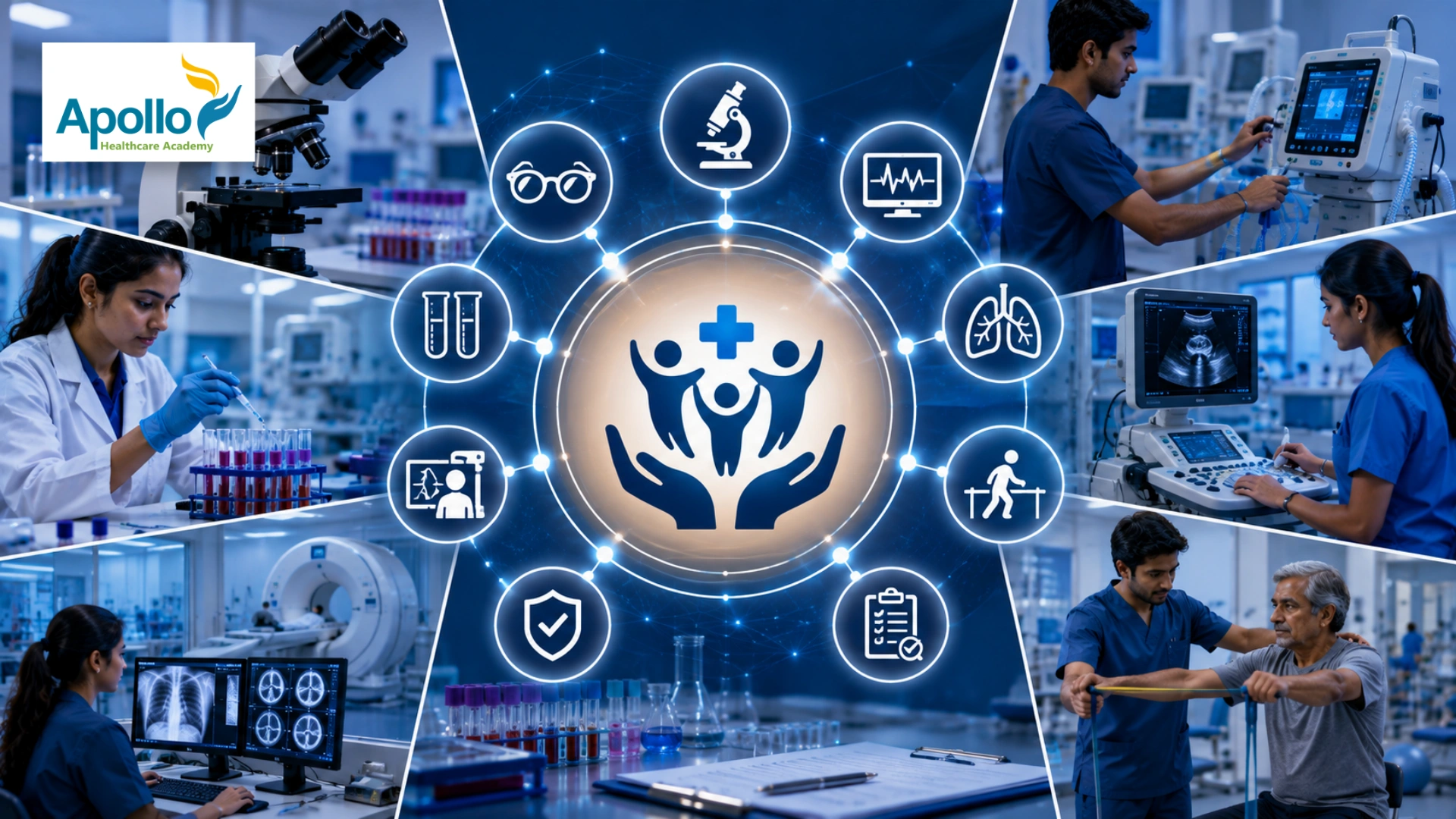
Whether students pursue Physiotherapy, Medical Laboratory Technology, Radiology, Respiratory Therapy, Optometry, or other allied health programs, the focus remains on developing both technical expertise and professional skills that employers value.