

An anesthesia course can mean three different things in India: a short technician certificate or diploma, a bachelor’s degree in anaesthesia and operation theatre technology, or the doctor’s route of MBBS followed by an MD, DNB or PG diploma in anaesthesia. Anesthesia and anaesthesia are the same word spelt two ways. The first two routes train you to assist the anaesthesia team. Only the doctor route makes you an anaesthesiologist, the doctor who plans and gives the anaesthesia. This guide explains each route, who can join, how long it takes, whether you need NEET, what it costs at Apollo Healthcare Academy and the work it leads to.
Anesthesia Course at a Glance
| Technician (certificate or diploma) | Bachelor’s degree (B.AOTT and similar) | Doctor route (MBBS, then MD, DNB or diploma) | |
|---|---|---|---|
| You become | Anaesthesia technician or assistant | Anaesthesia technologist or OT technologist | Anaesthesiologist, a doctor |
| Entry | Differs by institute | Class 12 (10+2) with Physics, Chemistry and Biology or Mathematics | Class 12, then NEET UG for MBBS |
| Usual length | Differs by institute. A diploma or degree under the NCAHP Act runs 2 to 4 years | 4 years in the UGC degree list, though some colleges still list 3. 4 years at Apollo Healthcare Academy, including internships | MBBS, then an MD, DNB or PG diploma in anaesthesia |
| Entrance exam | Differs by institute | Differs by college. No NEET at Apollo Healthcare Academy | NEET UG for MBBS and NEET PG for the MD, DNB or diploma |
Details differ by institute and can change, so check them with the institute you plan to join.
Anaesthesia Technician and Anaesthesiologist: Who Does What
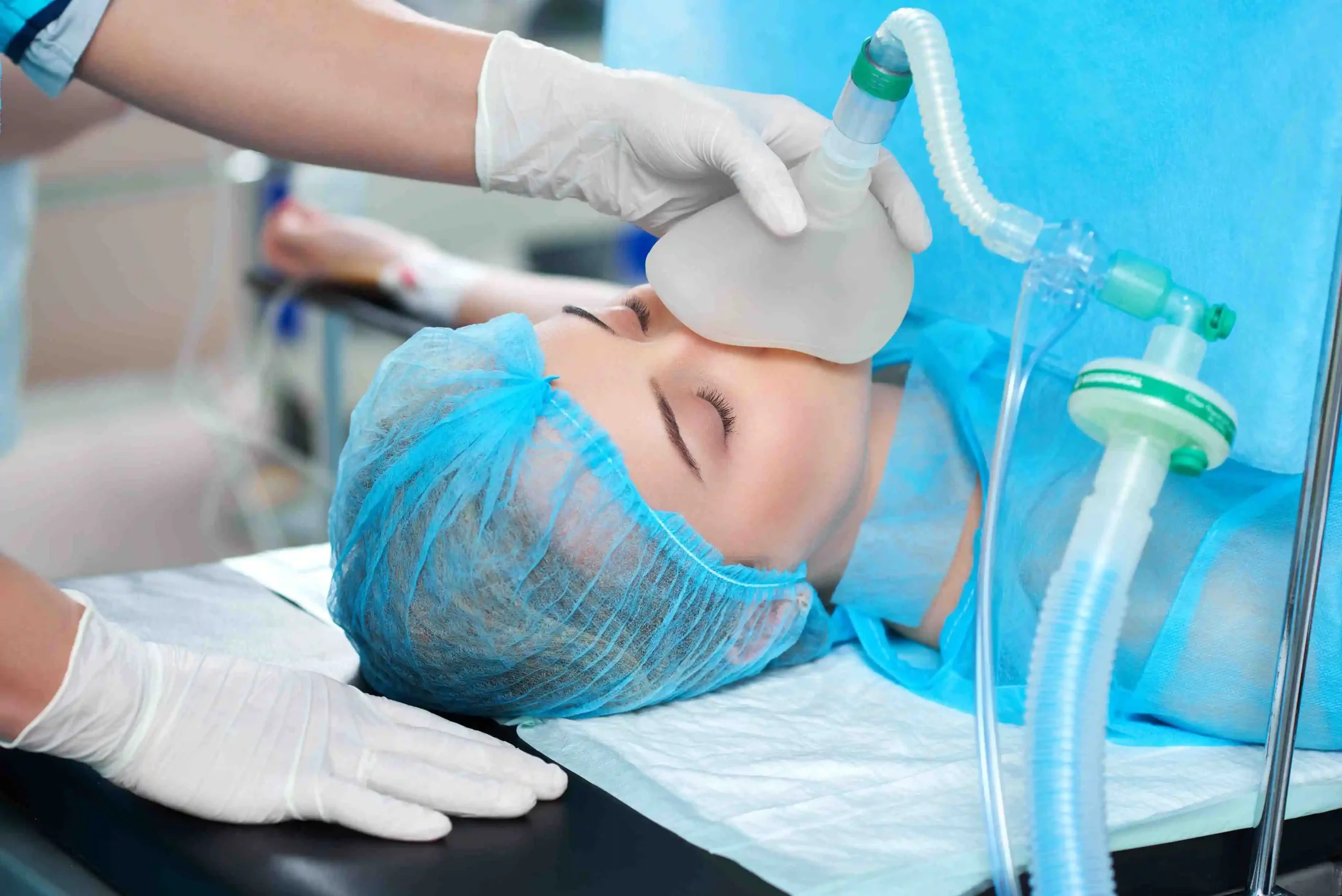
An anaesthesiologist is a specialist doctor. They give the anaesthetic and stay with the patient during the operation, checking heart rate, blood pressure and oxygen levels (NHS). An anaesthesia technician is an allied health professional, not a doctor. The NCAHP Act, 2021 lists anaesthesia assistants and technologists among the allied health professionals who work in the operation theatre as part of the surgical team. In the B.AOTT at Apollo Healthcare Academy, students learn OT management, disinfection and sterilisation, and how to work with anaesthesia equipment, medical instruments and surgical instruments. A bachelor’s degree in this field does not make you a doctor, so decide which route you want before you pick a course.
Route 1: Technician Certificate or Diploma
Institutes offer certificate and diploma courses in anaesthesia technology. Length, entry rules and recognition differ by institute, so ask each one for its syllabus, its hospital training and who recognises the course. The NCAHP Act, 2021 sets the length of an allied health diploma or degree at two to four years.
This is the quickest way into an anaesthesia team in a support role. If you want a degree later, diploma holders in anaesthesia and operation theatre technology can apply directly to the second year (third semester) of the B.AOTT at Apollo Healthcare Academy, subject to university norms. For the OT side of this field, read our guide to the OT technician course.
Route 2: BSc Anaesthesia Course After 12th
The bachelor’s degree is what most people mean by BSc anesthesia. The UGC’s degree and nomenclature notification of 27 August 2026, published by the NCAHP, lists the Bachelor of Anaesthesia and Operation Theatre Technology (B.AOTT) as a four-year bachelor’s degree with 10+2 as the entry qualification (NCAHP). Some colleges still list a 3-year course, so ask whether the internship is counted. The B.AOTT at Apollo Healthcare Academy takes four years across eight semesters, and the last two are internships.
Who Can Join the B.AOTT?
- Class 12 (10+2) from a recognised board with Physics, Chemistry and Biology or Mathematics, as set by the NCAHP
- Age 17 by 31 December of the admission year
- Admission is on Class 12 marks, and NEET is not required
Check the latest rules on the Apollo Healthcare Academy admissions page before you apply.
What You Study in the B.AOTT
| Year | What you study |
|---|---|
| Year 1 (semesters I and II) | Body and disease basics: anatomy, physiology, biochemistry, pathology and microbiology, with communication, medical law and ethics, computer skills and a first introduction to anaesthesia and the OT |
| Year 2 (semesters III and IV) | The core of the field: anaesthesia techniques and surgical procedures at basic and advanced level, pharmacology, haematology, basic intensive care, clinical medicine, the CSSD and manifold area, and clinical observation |
| Year 3 (semesters V and VI) | Deeper specialist training in anaesthesia and surgery, recent advances in the field, community medicine, supervised clinical practice and scientific writing |
| Year 4 (semesters VII and VIII) | Two internships and an applied research and audit project |
The structure can be updated from time to time, so check the current subject list with the admissions team.
Route 3: The Doctor’s Route, MBBS and Then MD or DNB
To become an anaesthesiologist you must first become a doctor. That starts with the MBBS, which you enter through NEET UG after Class 12 (National Medical Commission Act, 2019, section 14). After the MBBS and the internship, you take NEET PG. It is the entrance test for MD, MS and PG diploma courses, and for the post-MBBS DNB and NBEMS diploma courses run by the National Board of Examinations in Medical Sciences (NBEMS). In anaesthesia, that gives you three postgraduate options:
- MD in Anaesthesiology at a medical college
- DNB (Diplomate of National Board) in Anaesthesiology, awarded by NBEMS after training at an NBEMS-accredited hospital
- A PG diploma in anaesthesia (DA), offered at some medical colleges and as an NBEMS diploma at accredited hospitals
Each stage takes several years, so check the current lengths with the National Medical Commission and NBEMS before you plan.
Apollo Healthcare Academy does not offer the MBBS or any of these postgraduate courses. Our programme is the technician-side degree in Route 2.
Can You Study Anesthesia Without NEET?
For technician courses, it depends on the institute, so ask each one. The B.AOTT at Apollo Healthcare Academy admits on Class 12 marks and does not need NEET. Admission rules for allied health courses can change, so check the latest rules on our admissions page before you apply. For the doctor route, no. You need NEET UG for the MBBS and NEET PG for the MD, DNB or diploma.
Can You Do an Anesthesia Course Online?
Online courses can teach theory, but the hands-on clinical training this work depends on, such as preparing anaesthesia equipment, monitoring patients and working in a live operation theatre, cannot be done online. The UGC has also decided that universities may not offer allied and healthcare programmes covered by the NCAHP Act, 2021 in distance or online mode from the July–August 2025 session (UGC, 592nd meeting, item 2.08). If a course is sold as online, check who recognises it and where its clinical training happens before you pay.
Anesthesia Course Fees
Fees depend on the level, the college and whether it is government or private. The figures you find online vary widely and rarely say where they come from, so ask every college for its full fee structure in writing. At Apollo Healthcare Academy, the tuition fee for the B.AOTT is ₹2.5 lakh per annum.
Scholarships are tuition fee waivers, awarded by the partner university, based on a composite score: half from the AHA Scholarship Test and half from your Class 12 aggregate. A score of 95 and above earns a 25% waiver, 90 to 94.99 earns 15%, and 85 to 89.99 earns 10%. Awards go in order of score until 10% of the intake is filled, so reaching a slab does not guarantee a waiver. The rules for the 2026-27 session are on the scholarship page.
Jobs After an Anesthesia Course
Technician and B.AOTT graduates work in the operation theatre as part of the surgical team. B.AOTT graduates can work in settings such as multi-speciality hospitals, surgical units, emergency and trauma centres, private hospitals and clinics, critical care facilities and surgical care centres, in roles like these:
- Operation Theatre Technologist
- Anaesthesia Technologist
- Surgical Support Executive
- OT Assistant
- Perioperative Care Technologist
- OT Coordinator
With experience, one path runs from junior OT technologist to senior technologist after 3 to 5 years, OT supervisor after 5 to 8 years, and OT manager or surgical services coordinator after 8 years or more. For further study, options include a master’s in allied health sciences, an MBA in healthcare management and clinical research programmes. Doctors who complete the MD work as anaesthesiologists in hospitals.
Pay differs a great deal between the routes. An anaesthesiologist is a specialist doctor and a technician is an allied health professional, so their training, jobs and pay are very different.
For anaesthesia technicians, salary sites and job listings point to roughly ₹1.2 lakh to ₹5.5 lakh a year, with freshers at the lower end. In October 2026, most anaesthesia technician jobs listed on Indeed and Glassdoor offered ₹10,000 to ₹30,000 a month. PayScale puts the median base salary at ₹3 lakh a year, and SalaryExpert estimates about ₹3.6 lakh a year with 1 to 3 years’ experience and about ₹5.4 lakh with 8 years or more. These are estimates from salary surveys and job ads, not a promise of what you will earn. Pay depends on the employer, the city, your qualification and your experience.
Which Route Should You Choose?
- Choose the technician diploma if you want to start work in an anaesthesia team soonest.
- Choose the B.AOTT if you want a degree with four years of classroom and hospital training and a base for further study.
- Choose the MBBS route only if you want to be the doctor, and you are ready for NEET UG, NEET PG and several years of study.
Study the B.AOTT at Apollo Healthcare Academy
If you want the technician-side degree, the B.AOTT is a four-year programme that combines classroom learning with hospital training. Our partner universities offer and award the degree, and Apollo Healthcare Academy provides the clinical training and career support. You can see all the programmes we offer on the programmes page, the partner universities and the partner hospitals we work with. We give students job and placement support. It helps you prepare and connect with employers, but it does not guarantee a job. Read the full B.AOTT programme details, or speak to the team through the admissions page.
Sources
- Length of allied health diplomas and degrees (two to four years), and anaesthesia assistants, technologists and OT technologists as allied health professionals: National Commission for Allied and Healthcare Professions Act, 2021, section 2 and the Schedule.
- NEET UG for MBBS: National Medical Commission Act, 2019, section 14.
- NEET PG for MD, MS and PG diploma courses, and for post-MBBS DNB and NBEMS diploma courses, open to MBBS graduates who have completed an internship: National Board of Examinations in Medical Sciences.
- The B.AOTT as a four-year bachelor’s degree with 10+2 entry: UGC degree and nomenclature notification, 27 August 2026, published by the NCAHP.
- No allied and healthcare programmes in distance or online mode from July–August 2025: University Grants Commission, minutes of the 592nd meeting, item 2.08.
- Anaesthesia technician pay (checked 22 October 2026): PayScale, SalaryExpert, and job listings on Indeed and Glassdoor.
- Who gives the anaesthetic and what the anaesthetist monitors: NHS, General anaesthetic.
- Apollo Healthcare Academy fee, scholarship, eligibility, subjects and roles: our B.AOTT programme page and scholarship page.
FAQs
What Is an Anesthesia Course?
It is a course that trains you to work in the anaesthesia team. It can be a technician certificate or diploma, a bachelor’s degree in anaesthesia and operation theatre technology, or, for doctors, an MD, DNB or diploma in anaesthesia after the MBBS.
How Many Years Is the Anesthesia Course?
It depends on the route. A diploma or degree in anaesthesia technology under the NCAHP Act, 2021 runs for two to four years. The UGC degree list sets the B.AOTT at four years, and the B.AOTT at Apollo Healthcare Academy takes four years, including internships. The doctor route is the MBBS followed by an MD, DNB or PG diploma in anaesthesia, and each stage takes several years.
Can I Study Anesthesia Without NEET?
For technician courses, it depends on the institute, so ask each one. The B.AOTT at Apollo Healthcare Academy admits on Class 12 marks and does not need NEET. To become an anaesthesiologist you need NEET UG for the MBBS and NEET PG for the MD, DNB or diploma.
Can I Study Anesthesia After 12th?
Yes. After Class 12 you can apply for a bachelor’s degree such as the B.AOTT, or for a diploma at institutes that offer one. For the B.AOTT at Apollo Healthcare Academy you need Class 12 (10+2) with Physics, Chemistry and Biology or Mathematics.
Is BSc Anesthesia Equal to a Doctor?
No. A BSc in anaesthesia technology trains you to assist the anaesthesia team. An anaesthesiologist is a doctor who has completed an MBBS and a postgraduate qualification in anaesthesia, such as an MD or DNB.
Is BSc Anesthesia a Good Course?
It can be, if you want a hands-on role in the operation theatre. The work carries responsibility and can mean long or unpredictable hours, so be sure you are comfortable with that. Compare colleges on the syllabus, the hospital training and who awards the degree before you choose.
What Is the Eligibility for the B.AOTT at Apollo Healthcare Academy?
You need Class 12 (10+2) from a recognised board with Physics, Chemistry and Biology or Mathematics, and to be 17 years old by 31 December of the admission year. Admission is on Class 12 marks, and NEET is not required. Diploma holders in anaesthesia and operation theatre technology can apply to the second year, subject to university norms.
What Is the Fee for the Anesthesia Course at Apollo Healthcare Academy?
The tuition fee for the B.AOTT is ₹2.5 lakh per annum. Scholarships are available on a composite score, and the rules are on our scholarship page. The admissions team can tell you what the fee includes.
What Is the Anesthesia Course Salary?
It depends on the route. Salary sites and job listings put most anaesthesia technicians in India at roughly ₹1.2 lakh to ₹5.5 lakh a year, with freshers at the lower end (October 2026). An anaesthesiologist is a specialist doctor, so their pay is on a very different scale. Pay also depends on the employer, the city and your experience, and Apollo Healthcare Academy does not promise any salary.
Is There a Diploma in Anesthesia Technology?
Yes. Several institutes offer a diploma in anaesthesia technology, and the NCAHP Act, 2021 sets the length of an allied health diploma or degree at two to four years. Diploma holders can apply to the second year of the B.AOTT at Apollo Healthcare Academy, subject to university norms.
Does Apollo Healthcare Academy Give Placement Support?
Yes. We give students job and placement support. It does not guarantee a job, and the admissions team can explain how it works.